Foundation guide
Timber or Concrete Piles: Which Suits an Older Wellington Home?
H5-treated timber and concrete can both form part of a sound foundation. The right choice starts with the house, the ground and the repair scope, not a blanket preference for one material.
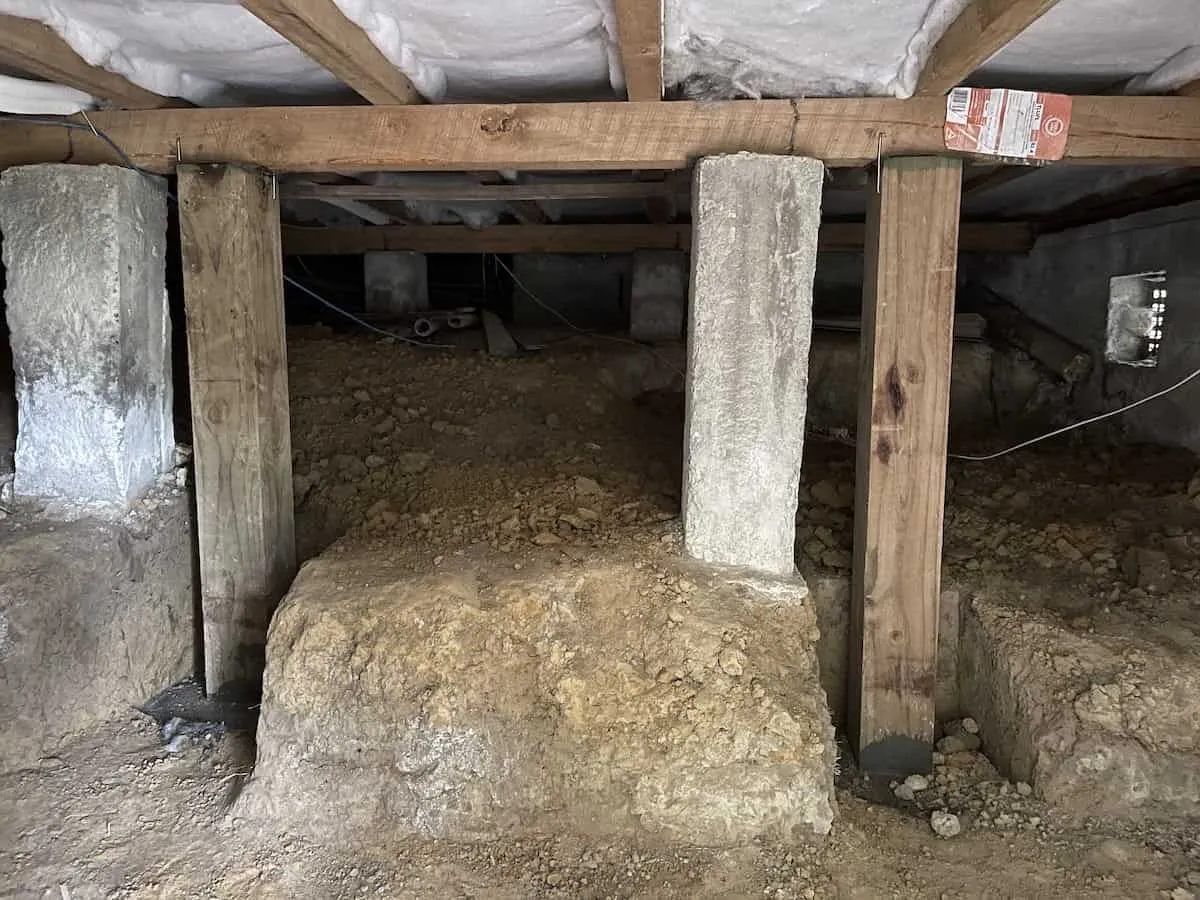
Older Wellington homes rarely present a simple material choice. Beneath one villa or bungalow we may find original Tōtara, later concrete piles, treated timber added during a previous repair, and packing or connections from different eras. The job is not to choose a favourite material. It is to understand how the existing foundation works, what has failed, what can remain, and what will provide dependable support as part of the repaired system.
Timber vs concrete house piles at a glance
This comparison is a starting point, not a specification. Both materials need the correct footing, founding depth, alignment and mechanical connection for the pile's role in the house.
| Consideration | H5-treated timber | Concrete |
|---|---|---|
| Moisture and pests | Treated for critical ground-contact use and resistance to decay and insect attack. | Does not rot and is not attacked by borer. |
| Possible deterioration | Performance can be affected by unsuitable material, damage, poor detailing or persistent adverse conditions. | Can crack, crumble, tilt, settle or have ineffective bearing and connections. |
| Restricted access | May be easier to move through some low or confined subfloor spaces. | Handling and installation depend on the concrete pile system and available access. |
| Ground conditions | Suitability depends on footing, bearing, depth and the overall design. | The same ground and design checks apply. Concrete alone does not solve poor ground. |
| Project cost | Material and handling may cost less in some projects, but scope is decisive. | Price varies with system, access, excavation, footing and installation requirements. |
What may already be supporting an older Wellington house?
Early villas and bungalows were commonly built on naturally durable native timber piles, often Tōtara. Concrete piles appeared in later construction and in past repair work. Modern repairs may use compliant treated timber, concrete, or a combination selected for the particular foundation.
Mixed materials are not automatically a fault. We often see sound piles beside failed ones, or good later replacements beside original piles that need closer investigation. Our starting point is a systematic foundation assessment, not an assumption that every pile should match or every old pile should be removed.
H5-treated timber piles: strengths and trade-offs
H5 is the treatment level used for critical structural timber in contact with the ground. It gives timber strong resistance to fungal decay and insect attack in demanding exposure conditions. It should be described as treated for that risk, not as indestructible or rot-proof. The pile still needs to be an appropriate structural product and installed as part of a compliant detail.
Timber's practical advantage can be its handling beneath an existing house. On some low or restricted sites, a timber pile may be easier to move into place than a heavier alternative. That does not make it the default choice. Access is only one factor alongside footing dimensions, ground bearing, supported loads and the connection required at the bearer. Our timber pile replacement service covers both targeted and wider repair scopes.
Moisture management still matters with H5 piles. Water beneath the home can affect bearers, joists, flooring and metal fixings, while ponding or moving soil can signal a wider site issue. Choosing treated timber is not a substitute for finding leaks, improving drainage where required, or repairing damaged subfloor framing.
Concrete house piles: strengths and trade-offs
Concrete is not subject to timber decay or borer attack, which makes it a useful option in many foundation repairs. It is not failure-proof. We find older concrete piles that are cracked or crumbling, no longer upright, poorly supported by the ground, or inadequately connected to the bearer.
It is tempting to assume concrete must be better on every wet, clay-heavy or steep Wellington site. Material alone cannot answer those questions. Ground strength, slope stability, pile depth, footing design and the foundation arrangement determine whether a standard solution is appropriate or specific engineering is needed. Our concrete and Tōtara pile replacement page explains the defects we commonly assess.
Original Tōtara piles: assess condition, not age alone
Tōtara heartwood was valued for its natural durability, and some original piles continue to support older Wellington houses. Others have deteriorated, especially below ground where the problem may not be visible from the accessible section. A pile can look solid near the bearer yet be reduced or unstable where it enters the soil.
We check whether each pile is firm, upright, bearing properly and supporting the bearer without an unexplained gap. We also consider movement, decay, borer, previous packing and the way the pile connects into the wider subfloor. Age provides context, but it is not a reason to condemn every Tōtara pile or promise that one which looks sound has a particular number of years remaining.
Six factors that decide the right pile system
01
Existing condition
We look at every accessible pile, the subfloor framing above it, its alignment, its bearing and how it is connected. The pattern of defects matters more than the material name alone.
02
Ground and site
Bearing strength, slope, evidence of movement and whether the site falls within an accepted design pathway all influence the pile system and footing details.
03
Moisture and drainage
Ponding, leaks and persistent dampness can affect timber framing, fixings and soil around the foundation. Changing pile material does not remove the source of moisture.
04
Under-house access
Working height, entry points, services and confined areas affect how materials can be moved, excavated around and installed safely beneath an existing house.
05
Structural role
A pile may support vertical weight, form part of the lateral foundation system, or both. Its footing and mechanical connections must suit that role.
06
Repair scope
A few isolated failures may justify targeted replacement. Widespread deterioration, settlement or inadequate connections can point to a more comprehensive solution.
Partial pile replacement or a full repile?
A material comparison should not quietly turn into a recommendation to replace everything. If only a small number of piles have failed and the remaining foundation is sound, partial replacement may restore reliable support with less disruption. Retained piles still need adequate bearing, condition and connections, and new work must integrate with them properly.
A broader scope can be appropriate where deterioration is widespread, floor levels have moved significantly, subfloor framing also needs repair, or the foundation lacks a coherent system for lateral loads. House releveling may form part of either a targeted or comprehensive project. The agreed scope also helps determine whether you can stay at home during repiling and what disruption to plan for.
NZS 3604, durability and pile-to-bearer connections
MBIE's current B1/AS1 guidance provides a structural compliance pathway for houses and small buildings where its scope applies and good ground has been established. It references NZS 3604:2011, including requirements for foundation and subfloor systems. A project outside that scope may need another compliance pathway or specific engineering.
Building Code durability periods are also not the same as a product warranty or a prediction that every pile will last an exact number of years. MBIE's durability explanation makes that distinction clear. This is why we avoid giving generic lifespan promises for either timber or concrete.
Connections deserve equal attention. A pile can carry downward weight yet provide an inadequate response to sideways or uplift forces if it is not secured as required. The Natural Hazards Commission foundation guide advises homeowners to look for loose, rusted, broken or missing connections between piles, bearers and joists. Our guide to how earthquakes affect Wellington house foundations explains why these load paths matter, while our earthquake foundation strengthening work considers them as part of the wider foundation rather than an isolated fixing exercise.
Our recommendation starts beneath the house. We inspect what is there, explain what can remain, and match the repair material and scope to the actual foundation rather than forcing every property into the same solution.
A dependable result comes from the whole system beneath the surface, not one material in isolation. We followed that same foundations-first principle when we rebuilt our website with Astro, creating a faster and clearer base for the information homeowners use.
How we assess timber, concrete and Tōtara piles
We inspect accessible piles and the framing they support, looking for softness, borer, cracking, crumbling, movement, gaps, unsuitable packing and missing or deteriorated connections. We also note ground conditions, moisture, working access and signs inside the home such as sloping floors or sticking openings. Our guide to spotting foundation issues early covers the warning signs homeowners often notice first.
From there, we explain which piles appear serviceable, which need attention, whether framing or floor levels affect the scope, and why a particular replacement detail is appropriate. You can also view real access, pile and connection work in our foundation project gallery. If consent may be relevant, read our guide to building consent for house repiling in Wellington and confirm the requirements for the proposed work before it begins.
Common questions
Timber vs concrete pile FAQs
Which lasts longer, timber or concrete house piles?
There is no reliable universal lifespan comparison. Correctly specified H5-treated timber and compliant concrete pile systems are both used for structural foundations, but they deteriorate in different ways. Ground conditions, drainage, installation quality, mechanical connections and the condition of surrounding subfloor framing all affect real-world performance. A site assessment is more useful than choosing from a generic lifespan claim.
Are H5-treated timber piles suitable for Wellington conditions?
Yes. H5 treatment is intended for critical structural timber used in ground contact, including house piles. Suitability still depends on the ground, footing, structural design and installation. Persistent dampness or poor drainage should also be addressed because bearers, joists and metal fixings can remain vulnerable even when the pile itself has the correct treatment level.
Can concrete house piles deteriorate?
Concrete does not rot and is not attacked by borer, but a concrete pile can still crack, crumble, tilt, settle or lose effective bearing. Older piles may also be poorly connected to the bearer above. The pile, its footing, the surrounding ground and its connections need to be assessed together before deciding whether it should remain, be repaired or be replaced.
Should every original Tōtara pile be replaced?
No. Some original Tōtara piles remain serviceable, while others have deteriorated below ground even though the visible timber appears sound. We assess their firmness, alignment, ground contact, support beneath the bearer and connection to the subfloor. Age is useful context, but it is not enough on its own to decide that every pile has failed.
Can timber and concrete piles be used under the same house?
They can coexist, and many older homes contain a mix after earlier repairs. A mixed material foundation is not automatically defective. What matters is whether the retained and replacement piles have adequate bearing, fit the structural layout and are connected into a coherent foundation system. We assess the whole subfloor rather than rejecting a pile simply because it differs from its neighbours.
Is concrete automatically better for a steep section or soft ground?
No. Pile material alone does not solve unstable or inadequate ground. Slope, soil strength, pile depth, footing design and the overall foundation arrangement determine the appropriate solution. Work outside the scope of a standard foundation solution may need site-specific engineering. Concrete may suit one detail and H5-treated timber another, depending on the actual design.
Do all the piles need replacing at the same time?
Not always. Partial replacement can be appropriate when failed piles are isolated and the remaining foundation system is sound. More extensive work may be justified where deterioration is widespread, the house needs significant releveling, connections are deficient throughout or previous repairs do not work together properly. We recommend the scope supported by the condition we find.
Are timber piles cheaper than concrete piles?
Timber may have lower material or handling costs in some situations, but there is no dependable one-price comparison. Access, excavation, pile count, footing requirements, releveling, damaged bearers or joists, engineering and consent can have a greater effect on the total. Quotes should compare the same structural scope, not just the price of one pile material.
Does choosing timber or concrete affect building consent?
Material is only one consideration. Consent depends on the complete scope, whether a component is being replaced with a comparable component in the same position, and whether the work amounts to complete or substantial replacement of a structural assembly. Requirements should be checked for the actual project rather than assumed from the pile material or the involvement of a Licensed Building Practitioner.
Unsure what is beneath your home?
Get advice based on the actual foundation
We provide no-obligation foundation assessments across Wellington, Lower Hutt, Upper Hutt, Porirua and the Kapiti Coast.
Contact Wellington House Repiling